Why do two Westchase listings priced within a few thousand dollars of each other end up costing different amounts every month once you actually own them? It is the question that trips up more buyers than any inspection surprise, and it rarely comes up until a lender is running numbers on a specific address instead of a search result.
The short answer is that Westchase is not one housing market wearing one price tag. It is several distinct markets stacked inside a single ZIP code, a single HOA name, and a single community development district, and the fees attached to that district are not the flat number most buyers assume they are. Understanding both pieces, the price spread and the fee spread, changes how you compare a Westchase listing to anything else on your list.
One ZIP Code, Several Different Housing Markets
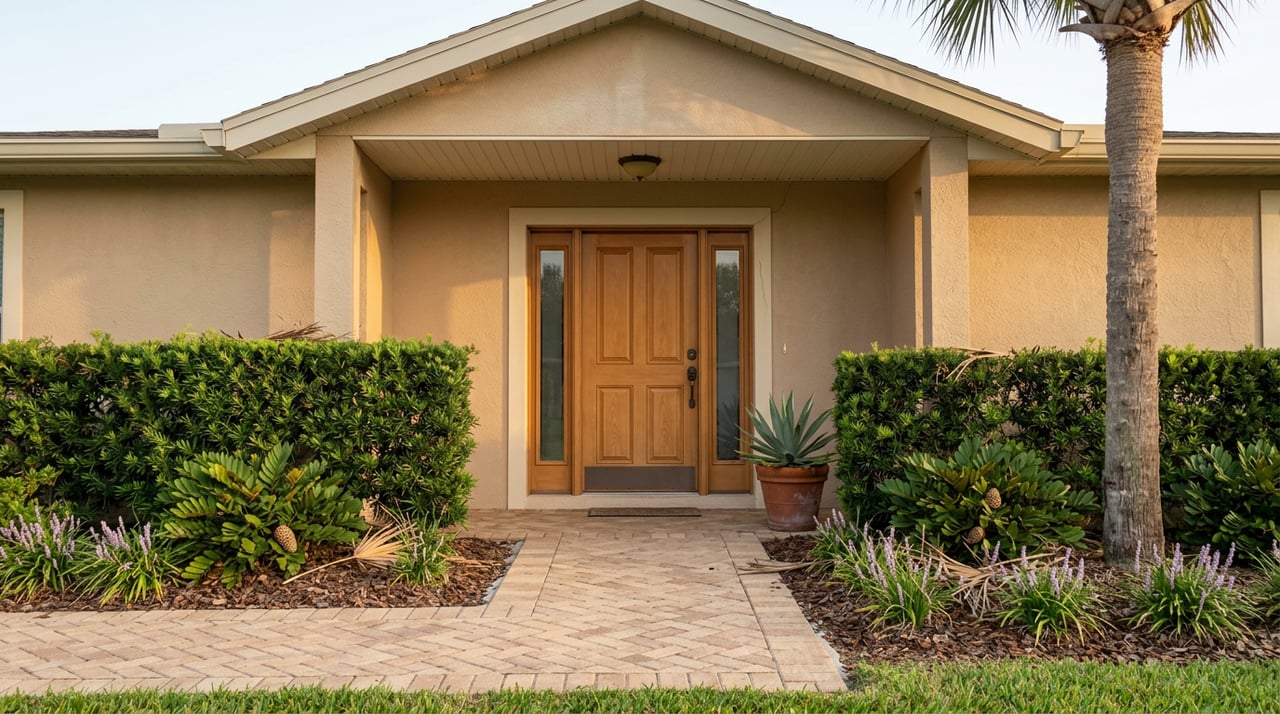
Westchase spans more than 2,000 acres and roughly 3,500 homes across dozens of individually named villages, and those villages do not sell like a single market. Pull the village-level breakdowns and the range is wide: homes in Lake Chase Condominiums have traded around $220,000, Countryway around $520,000, homes along Westchase Golf Course around $549,000, and homes in The Greens around $1,010,000. All four sit inside the same 33626 ZIP code that produces the one blended median price most portals report.
That blended figure, a median sale price in the high $520,000s for the three months ending in May 2026, is a real number. It is also an average of markets that behave nothing alike. A condo community, a golf-adjacent enclave, and an estate-lot village do not respond to the same buyer pool, the same inventory pressure, or the same seasonal rhythm, yet they all feed the same headline statistic. When you compare "Westchase's median" to another suburb's median, you are comparing a blend to a single number, which is a little like comparing a fruit basket's average weight to one apple.
Three Sources, Three Different Numbers, and That Is the Point
If you have shopped Westchase across a few sites, you have probably noticed the numbers do not match. One portal's July 2026 list-price median lands near $554,000. A ranking site puts the median home value closer to $559,500. A local brokerage's market snapshot for the same season shows an average sale price above $680,000, down more than 13 percent from its own prior window.
None of these are wrong. They are measuring different things. A median list price is not a median sale price. An average is pulled upward by a handful of high-end closings in a way a median is not. A three-month rolling window tells a different story than a single month. The disagreement between sources is not noise to filter out. It is a preview of the same lesson the village-level data already taught you: a single Westchase number is doing a lot of quiet averaging before it reaches you.
The Fee Bill Nobody Adds Up at the Open House
Here is the part that catches buyers off guard after they have already fallen for a listing. Nearly every Westchase home carries not one HOA-style charge but three separate layers, and only one of them is the same for every house in the community.
- The Westchase Community Association (WCA) master assessment. This is a flat, communitywide fee, set at $477 for 2026 regardless of which village you buy into or what the home is worth. It funds the two swim and tennis centers and covers deed-restriction enforcement across all of Westchase.
- The Westchase Community Development District (CDD) assessment. This is where the flat structure ends. The CDD's FY2026 adopted budget lists a General Fund base of $615 per unit, but once village-specific subfunds are layered in, the total per-unit CDD assessment ranges from roughly $441.80 to about $1,478.85 depending on which village the home sits in. This is a governmental, non-ad valorem charge that shows up on the Hillsborough County property tax bill, not a separate invoice you can opt out of.
- A possible sub-HOA on top of both. Several gated villages inside Westchase, The Vineyards among them, layer a third association fee that can bundle in services like lawn maintenance or exterior paint cycles. Whether this exists, and what it covers, depends entirely on the specific village and is not something the master WCA or CDD documents will tell you.
None of this is disclosed as a single line item anywhere a portal search shows you. It is spread across a tax bill, a homeowners association resale package, and sometimes a third document you only see once you are under contract.
Why the Spread Actually Moves Your Monthly Payment
Do the arithmetic and the gap stops being trivia. The WCA's flat $477 works out to about $40 a month for every home in Westchase. The CDD range, divided across twelve months, runs from roughly $37 to $123 a month depending on village. Stack a sub-HOA on top in a village like The Vineyards and the total recurring assessment load on two homes listed at the identical price can differ by more than $100 a month before either owner has touched a mortgage payment.
That gap matters for reasons beyond household budgeting. Lenders include mandatory HOA and CDD assessments in a buyer's debt-to-income calculation during underwriting. A higher CDD assessment on one address, even at the same purchase price as a lower-CDD address across the neighborhood, can shift what a buyer qualifies to borrow. Two homes that look interchangeable on a portal search can sit on opposite sides of a buyer's loan approval, and the only way to know which side you are on is to check the specific address, not the neighborhood average.
What to Ask Before the List Price Convinces You
A Westchase listing that looks like a clean comparison to a home in another suburb rarely is one until you have pulled a few extra details for that exact address.
- Ask for the current Hillsborough County non-ad valorem tax line so you can see the actual CDD assessment tied to that parcel, not a communitywide estimate.
- Ask whether the village carries a sub-HOA in addition to the master WCA assessment, and if so, request the current fee schedule and what it covers.
- Compare total carrying cost, principal, interest, taxes, insurance, WCA, CDD, and any sub-HOA, rather than list price or price per square foot alone.
- If you are cross-shopping Westchase against a suburb without a CDD, remember you are comparing a three-layer fee structure to what may be a single HOA due, and the sticker prices alone will not show you that difference.
A Few Questions Worth Asking Twice
Is the CDD assessment ever going away? Not typically while there is outstanding bond debt attached to a village's infrastructure. The debt service portion follows the bond terms, while the operations and maintenance portion is set annually and can shift with the district's adopted budget.
Does the WCA fee scale with home value? No. It is a flat per-home charge, which means it represents a larger share of the monthly cost on a smaller home than on a larger one.
Can a buyer prepay the CDD's capital portion? Some districts allow it, and it is district-specific. Anyone considering this should review the Westchase CDD's own bond documents and confirm current policy before assuming it applies.
The number on a listing page was never meant to answer these questions, and that is by design. A portal shows you a price. It does not show you which village that price sits in, what three separate governing bodies are charging on top of it, or how a lender will treat those charges when calculating what you can actually borrow. Getting those answers for one specific address, before you fall for the listing, is what turns a comparison shopper into a confident buyer.
If you are weighing a move into Westchase against another Tampa Bay suburb, or trying to figure out what a specific address will really cost you month to month, Cyndi Olmstead and the concierge team at Conci, REALTORS® can pull the village-specific numbers before you write an offer. Schedule your complimentary concierge consultation and get the real math, not just the median.